
EV Charger Installation in Abuja
We install home and commercial electric vehicle chargers across the Federal Capital Territory: a dedicated circuit from your distribution board, a driven earth rod, DC-fault protection, and a live charge test with your own car before we hand over.
On site within 6 hours anywhere in Abuja. Rated 5.0 on Google, open 24 hours, seven days a week.
Rated 5.0 on Google
Every review we have is a five star review.
On site in 6 hours
We come out for inspection and evaluation within six hours of your call, anywhere in the FCT.
Tested before handover
Earth loop, RCD trip time, insulation resistance, live charge.
Any charger, any car
Type 2 AC and CCS2 DC units, MG, BYD, Tesla, Hyundai, Kia, GAC, Geely.
Nigeria is buying electric cars faster than it is building places to charge them
Nigeria recorded an estimated 400% rise in electric vehicle adoption between 2020 and 2025, while the entire country still had roughly a dozen public charging or battery-swap sites in mid-2025. In practice that means an EV bought in Abuja is charged where it parks: at home, at the office, or at the estate. The charger on your wall is not a convenience. It is your fuel station.
12
Public EV charging and battery-swap sites in all of Nigeria
EV24 Africa, August 2025
400%
Growth in EV adoption in Nigeria between 2020 and 2025
LUG West Africa, reported in The Guardian Nigeria, January 2026
N1,596
Average price of a litre of petrol in Nigeria, May 2026
National Bureau of Statistics
N209.50
AEDC Band A electricity tariff per kWh
NERC MYTO, effective December 2025
What we install
Four kinds of work, all of it electrical work first and EV work second. The charger is the easy part. The circuit behind it is what decides whether it is safe and whether it keeps running.
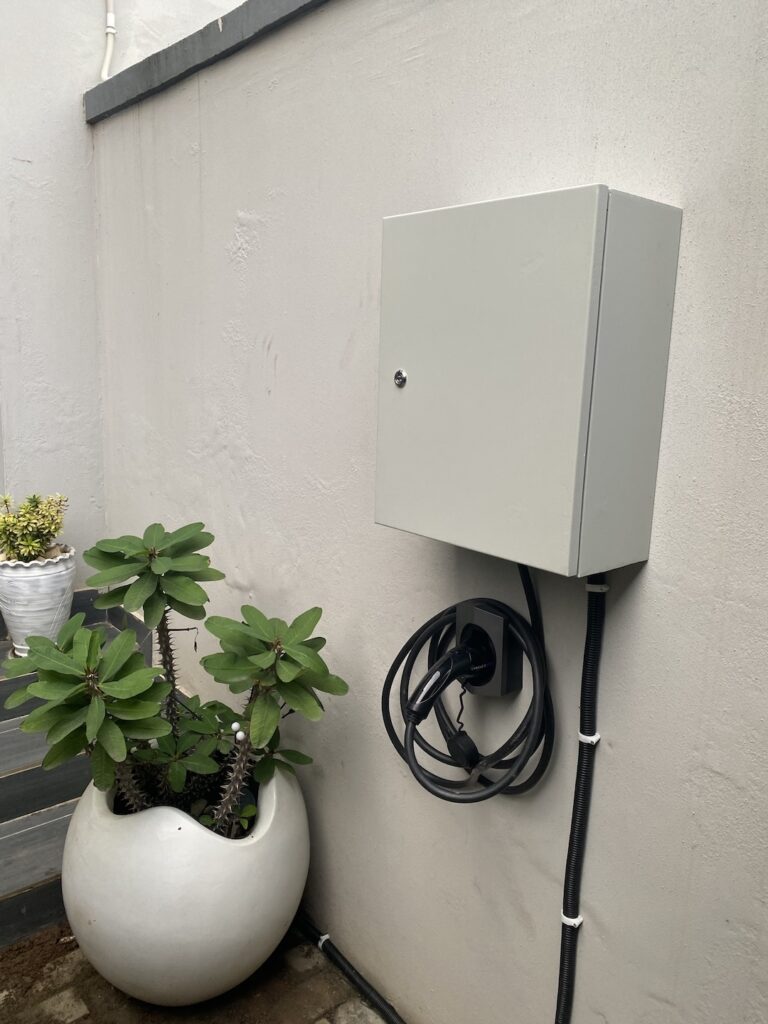
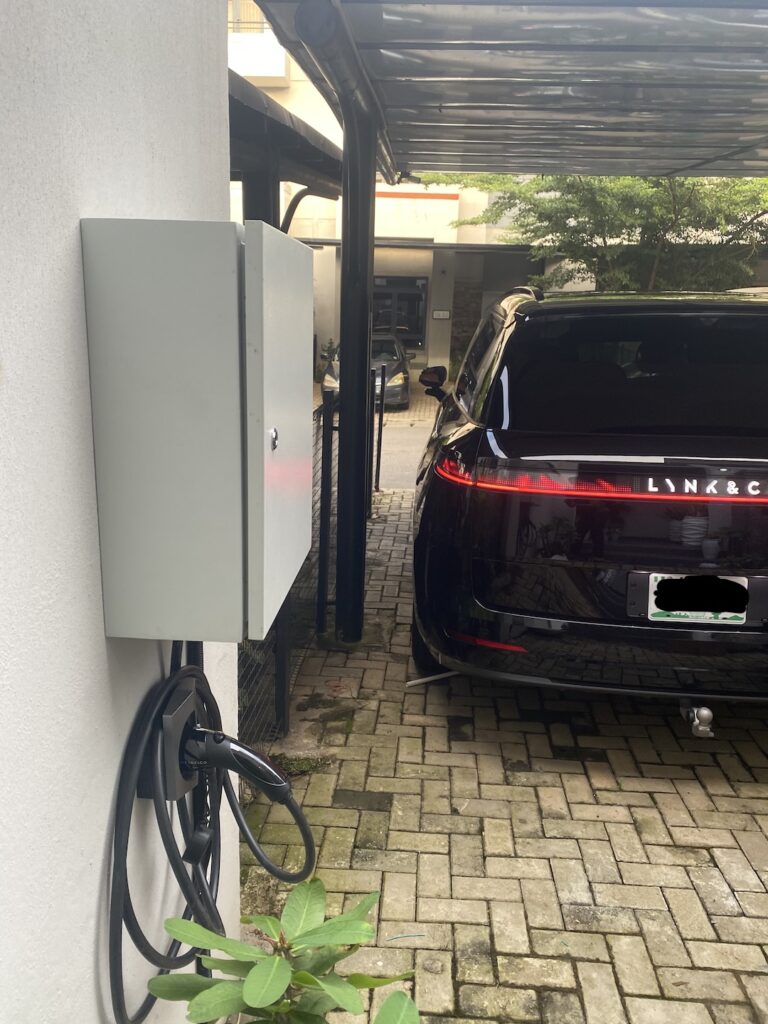
Home EV charger installation
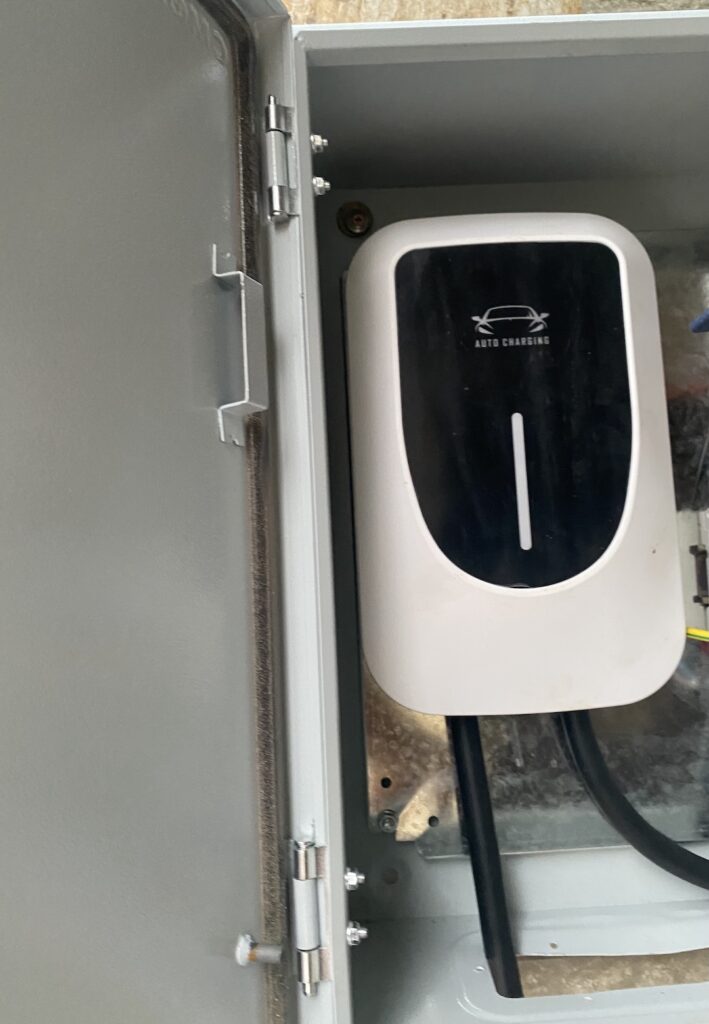
A 7kW or 22kW wall unit on its own circuit, sized to your supply and your overnight window. The work most Abuja EV owners actually need.
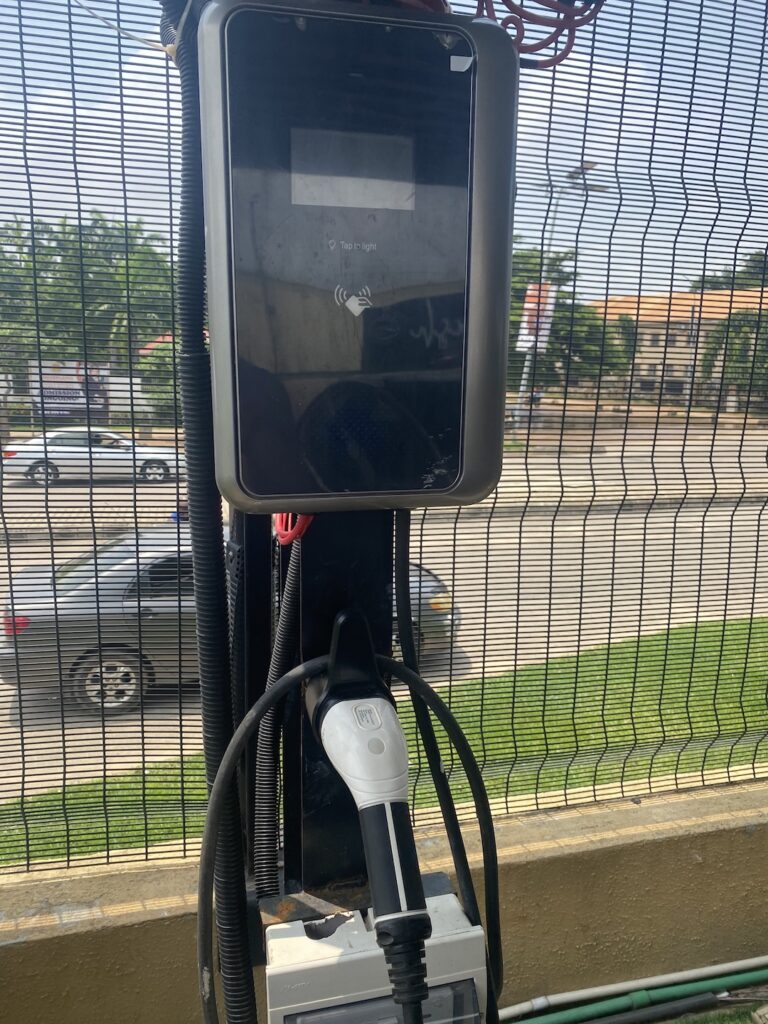
Commercial and public charging stations
Pedestal and wall units for offices, hotels, malls, estates and filling stations, with load management so you do not exceed the incoming supply.
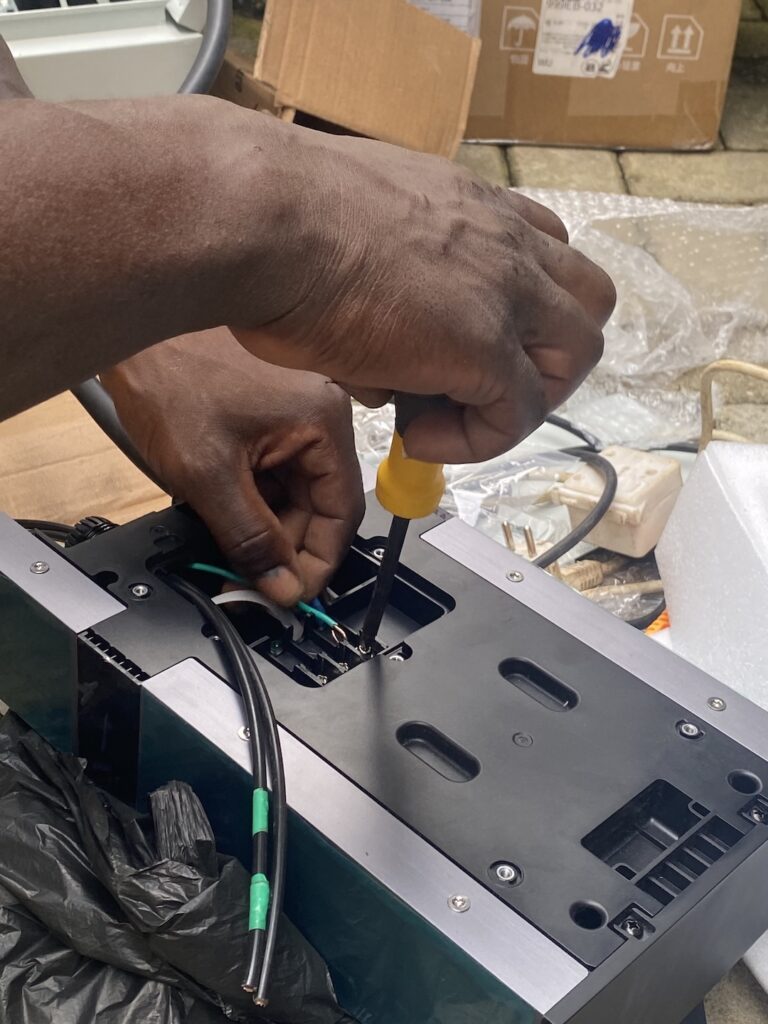
Charger repair and maintenance
Units that trip, cut out at low voltage, throw earth faults or stop talking to their app. We diagnose the installation, not just the box.

Solar and inverter-backed charging
Charging that keeps working when the feeder does not, with a changeover the charger can actually see and an inverter sized for continuous load.
Shop
Buy a charger you can take with you
A charger fixed to your wall solves charging at home. It does nothing for you in Kaduna, at a hotel in Wuse, or at a relative’s house on a Sunday. Portable chargers live in the boot and turn any suitable outlet into a charging point, which is what makes long journeys in Nigeria workable at all.
In stock now
Portable EV charger
The everyday unit. Lives in the boot and charges the car overnight at your destination, anywhere there is a sound outlet.
In stock now
Higher-capacity portable charger
For longer trips and heavier daily distance. Same convenience, more capability.
Tell us what you drive and we will confirm the right unit and the price. Read more about portable charging.
From the field
The five things that go wrong on Abuja EV installations
Charging from a 13A socket. A wall socket is designed for intermittent load. An EV pulls close to its maximum for eight to twelve hours at a stretch. Warm plugs, browned socket faces and melted pins are what that looks like a few months in.
No dedicated circuit. When the charger shares a ring with the air conditioner, the borehole pump and the freezer, the main breaker trips at 2am and the car is on 20% at 7am.
Earthing that was never measured. Plenty of Abuja properties have no driven electrode at all, or one that was installed in laterite years ago and has never been tested. An EV charger without a proven low-impedance earth is a shock risk the moment the supply neutral is lost.
The wrong residual current device. A standard AC-type RCD cannot see the smooth DC leakage a car’s onboard charger can produce. IEC 61851-1 requires 6mA DC fault detection, either through a Type B RCD or a charger with the detection built in. This is the single most-skipped item we find on other people’s work.
No usable changeover. A charger fed from a generator or inverter with no proper changeover, or an inverter that cannot hold 7kW continuously, will cut out mid-charge and can damage the unit.
Why an EV charger behaves differently in Abuja
Charger manufacturers write their manuals for a stable 230V supply, a short cable run and a certified earth. Abuja gives you none of those by default. These are the local conditions that change the design.
Voltage that moves
Supply on parts of the AEDC network swings well outside the range a charger expects. Units cut out on undervoltage, and repeated brownouts are hard on the onboard electronics. Where the readings justify it we specify a stabiliser or an inverter buffer rather than hoping.
Your band decides your charger
A Band A feeder is committed to 20 hours or more a day, which makes overnight charging on 7kW straightforward. On a lower band the supply window is short, so the honest answer is often a bigger charger, a battery buffer, or both. We check the band before we quote the unit.
Estate transformers
Gated estates in Gwarinpa, Lokogoma, Life Camp and Apo frequently share one transformer that is already near its limit. Adding several 7kW chargers to that is an estate-level decision, not a household one. We will tell you when a load study and the estate committee need to come first.
Distance from the meter
Compounds in Maitama, Asokoro, Guzape and Katampe routinely put 25 to 60 metres between the distribution board and the car port. At that length cable sizing stops being a formality: undersized cable means voltage drop, heat and a charger that quietly throttles.
Harmattan dust and heat
Outdoor units need a genuine IP65 rating and, ideally, shade. Dust ingress into an unsealed enclosure and direct afternoon sun on a black plastic case are both avoidable causes of early failure here.
Certification is not optional
The Nigerian Electricity Supply and Installation Standards Regulations 2015 place electrical installations under NEMSA inspection and certification. An EV charger is a new final circuit on your installation, and it should be treated with the same paperwork as any other.
What charging at home actually costs
This is the calculation most people want before they call. It uses two published numbers and no assumptions of ours beyond a typical consumption figure.
| Driving 100 km in Abuja | Cost | Basis |
|---|---|---|
| Petrol saloon at 10 litres per 100 km | about N15,960 | N1,596.25 per litre, NBS average for May 2026 |
| Electric car at 18 kWh per 100 km, charged at home | about N3,770 | N209.50 per kWh, AEDC Band A, NERC MYTO from December 2025 |
| Difference | roughly N12,000 saved per 100 km | Before charging losses, which typically add 5 to 10% |
Your own figure moves with your car, your tariff band, cable losses and how much you charge from an inverter rather than the grid. Installation cost differs from job to job in the same way, which is why we survey before quoting and then send you a written quote with the full cost broken down line by line.
How an installation runs
Six steps, in this order, on every job from a single home charger to a six-bay office park.
Phone or WhatsApp survey
Car model and connector, where it parks, how far that is from your board, your tariff band and whether you have an inverter. Ten minutes, and it decides most of the design.
Site visit and load assessment
We measure the incoming supply, check spare capacity at the board, test the earth and look at the cable route. If the supply will not carry the charger you want, you hear it here, not after the deposit.
A written quote with the full cost breakdown
Not a vague proposal. You get the charger, the cable size and route, the protective device, any changeover or stabiliser, the earthing work and the labour, each priced on its own line, so you can see exactly what you are paying for and what you could drop.
Installation
A dedicated circuit from the distribution board, correctly sized cable, an RCBO with DC-fault protection or a charger that provides it, a driven earth rod where the earth needs it, and mechanical protection on any exposed run.
Testing and handover
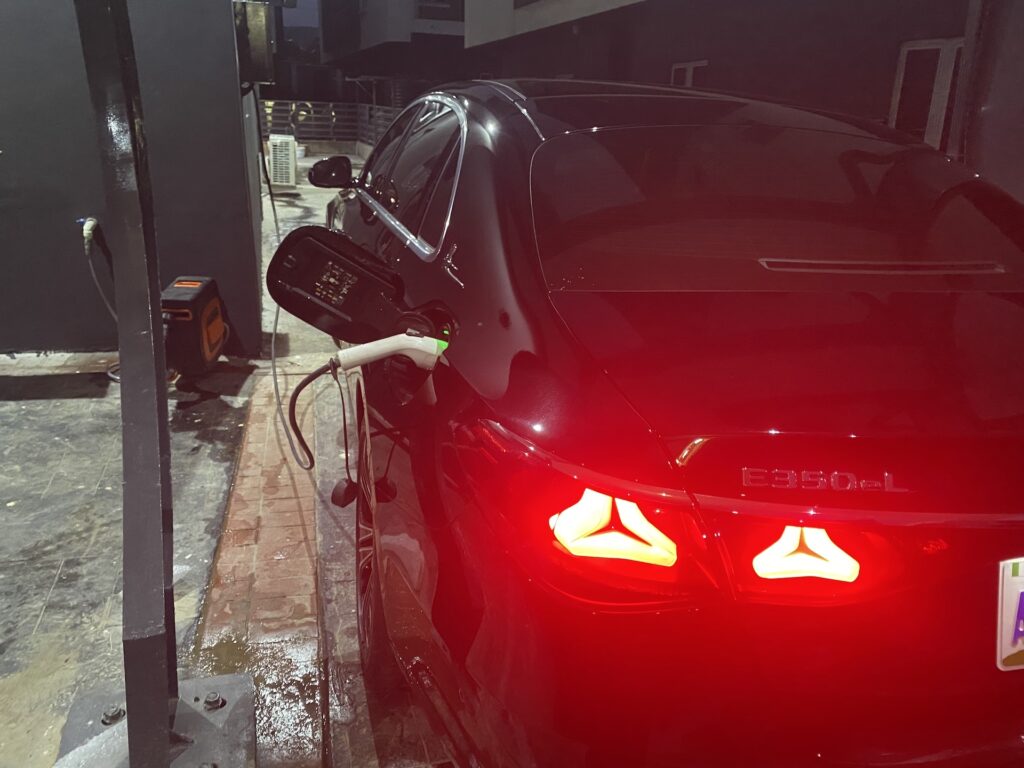
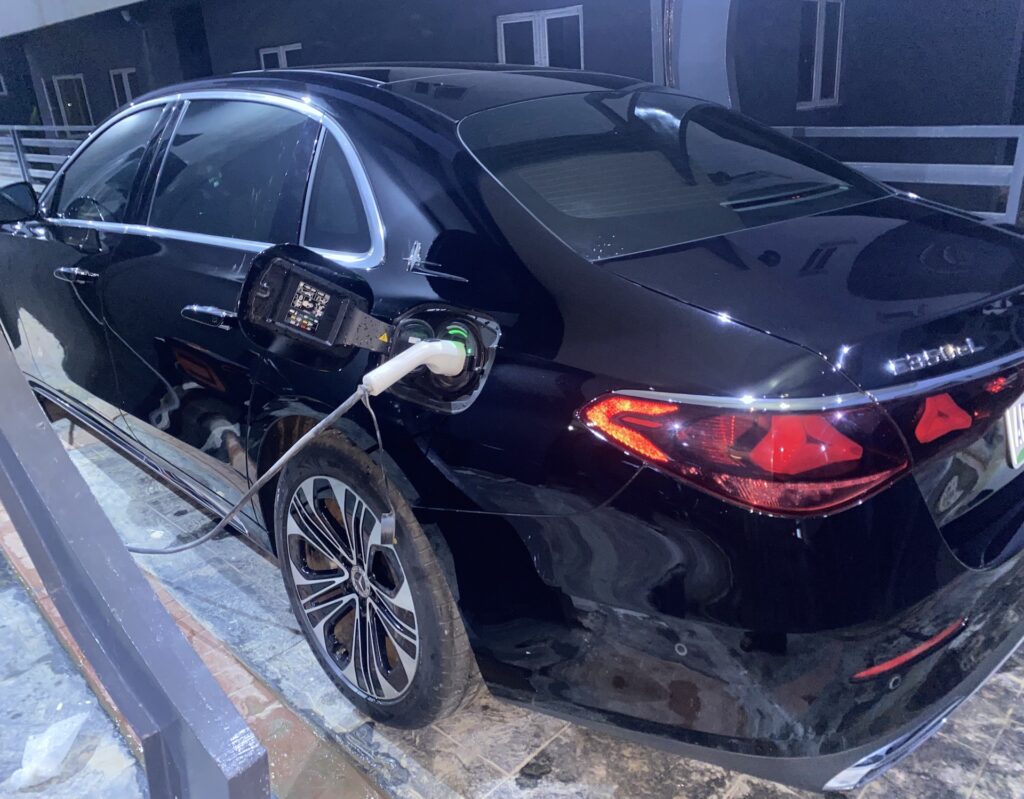
Earth loop impedance, RCD trip time, insulation resistance and continuity, then a live charge with your car in the compound before we leave. You get the readings.
Support afterwards
Twelve months on our workmanship, help setting up the charger app and any load limits, and a phone number that answers.
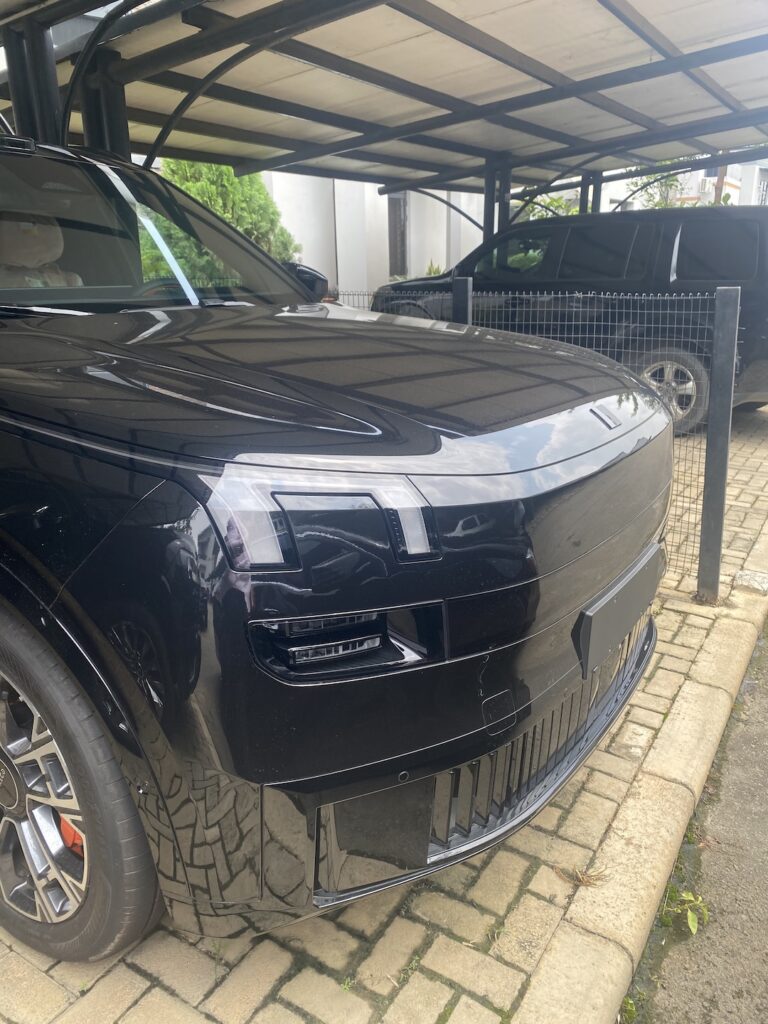
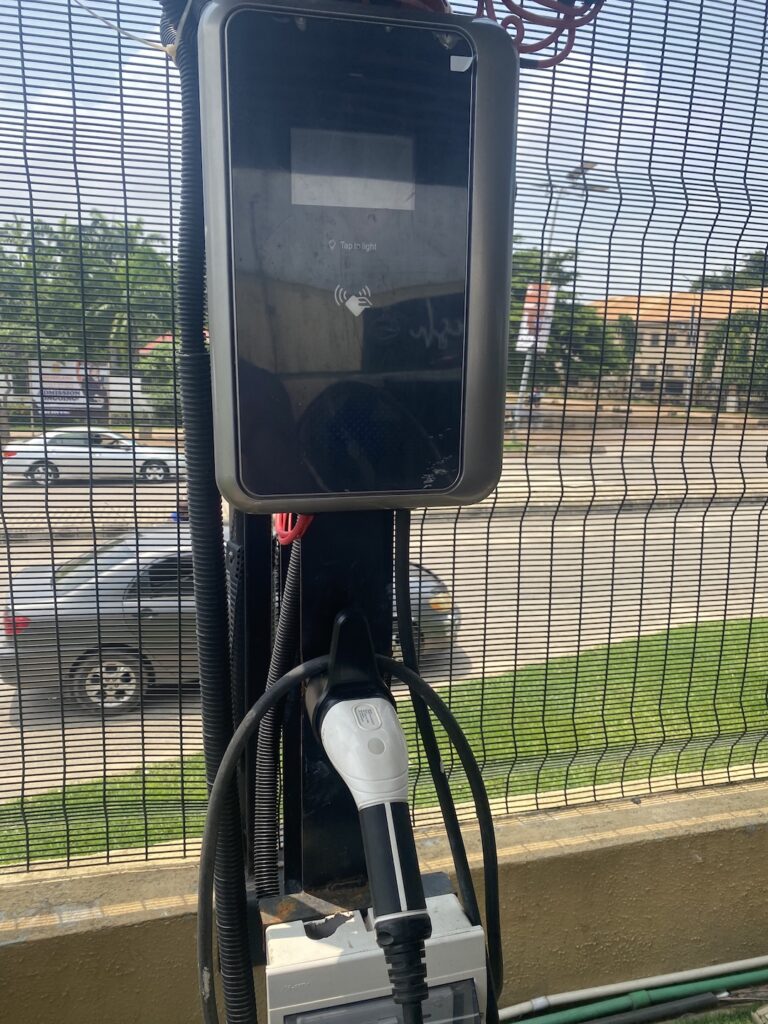
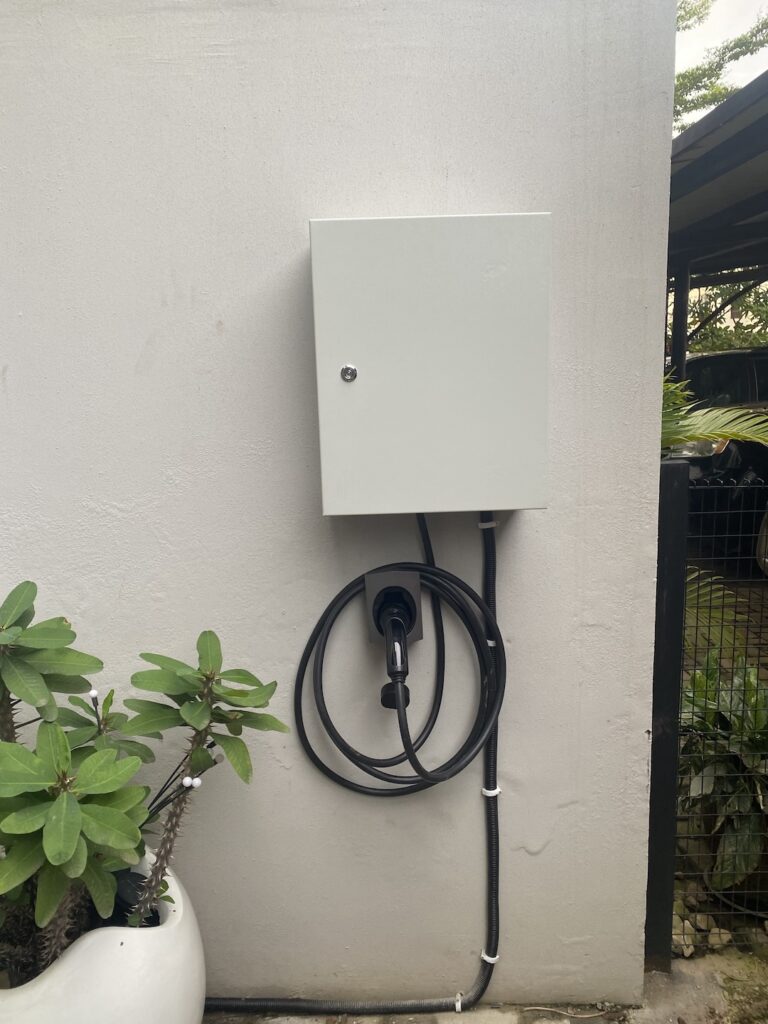

What Abuja EV owners say
Rated 5.0 out of 5 from 3 Google reviews. Read every one of them, unedited, on our Google Business Profile.
“Great service and fast response I will give you guys a 9/10.”
Finding the charger: very easy
Kekeboro Obarijima · Google review
“Had a smooth charging experience at this Abuja EV charger installation, very user friendly. The fast electric vehicle charging and reliable public EV power make it the best spot in the FCT. Will definitely be back.”
john mmoh · Google review
“Great service.”
HID ACADEMY · Google review
Where we work
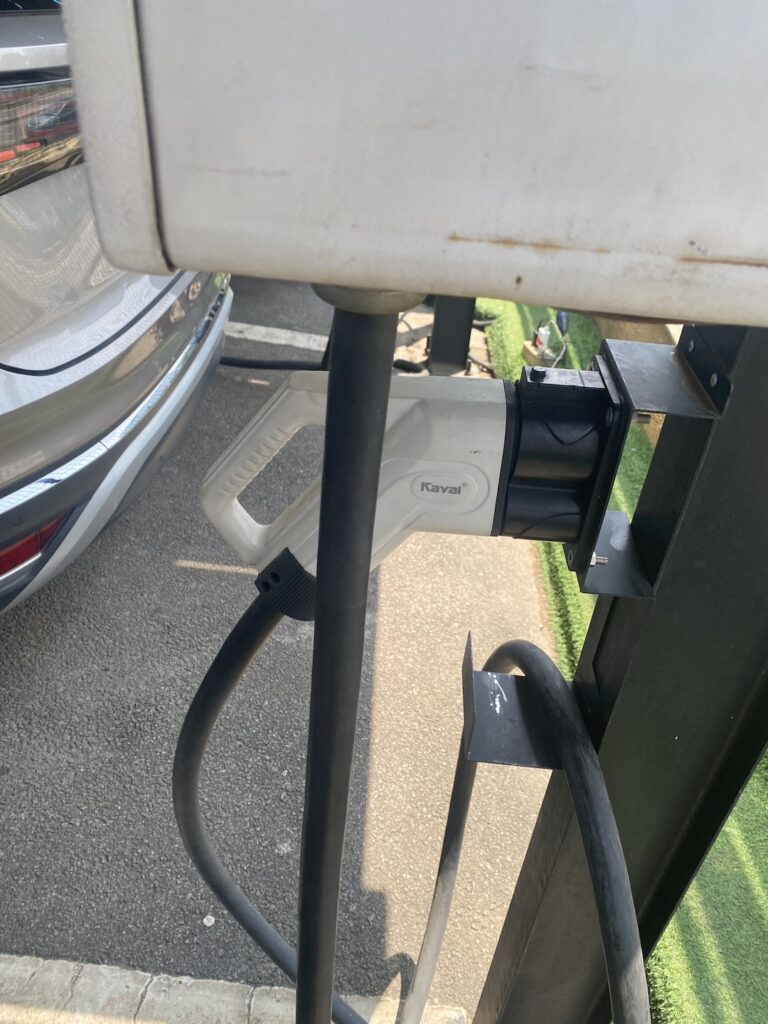
We are on site for inspection and evaluation within 6 hours of your call, anywhere in the Federal Capital Territory. Twenty-eight districts have their own page here, because the district genuinely changes the design: cable runs in Maitama, rock in Asokoro, shared transformers in Gwarinpa, supply hours in Lugbe.
Questions people ask before they call
If yours is not here, ask it on the phone. We would rather answer it in five minutes than have you guess.
The charger itself is only part of it. Price is driven by the unit you choose (7kW single phase, 22kW three phase, or a DC unit), the cable run from your distribution board to where the car parks, whether your supply has spare capacity, whether an earth electrode has to be driven, and whether you need a changeover or stabiliser. We survey first and give you one written figure, so call 0706 727 6002 or send a WhatsApp message with your car model and a photo of your distribution board.
A straightforward single-phase installation with a short cable run is usually a one-day job. Long runs across a compound, trenching, a new earth electrode, three-phase work or an estate approval will add days. We tell you the realistic duration at the survey.
The portable cable supplied with most EVs is intended for occasional use, and it draws close to the limit of a domestic socket for many hours at a time. Ordinary socket outlets in Nigeria are not built for that duty cycle. Use it when you are away from home, not as your daily charging method.
Roughly 40km of range per hour for a typical electric saloon or SUV, against roughly 10km per hour from a 13A socket. An overnight window of eight hours on 7kW is enough for almost any Abuja commuting pattern.
Yes. A 22kW AC charger needs a three-phase supply. On a single-phase supply the practical ceiling is around 7.4kW. If you have three phase available but unbalanced, we will say so, because loading one phase with a charger makes an existing imbalance worse.
It can, if the inverter can hold the charger’s continuous load and the changeover is arranged so the charger sees a clean supply. A 5kVA inverter will not run a 7kW charger. We size the two together rather than bolting one onto the other.
A correctly installed charger stops and restarts safely when supply returns. Problems come from unstable supply rather than clean outages: repeated undervoltage events, or a generator changeover that leaves the charger with a floating neutral. Both are design issues we deal with at survey.
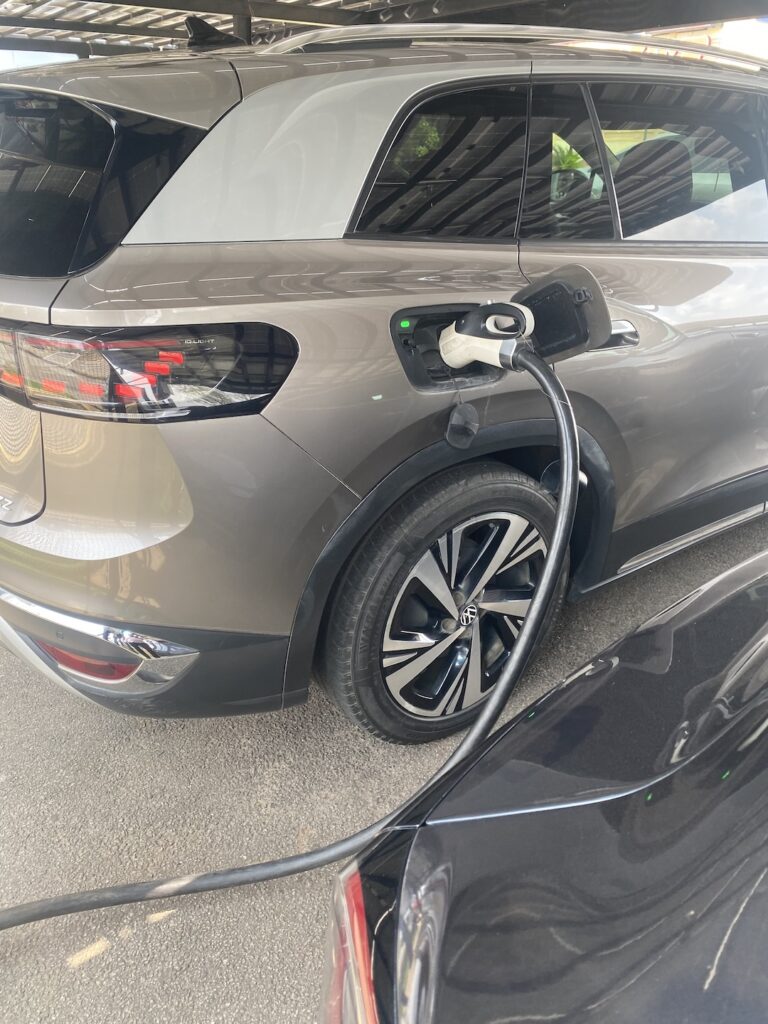
Yes. Nearly every EV sold in Nigeria uses a Type 2 connector for AC charging, so a Type 2 charger covers MG, BYD, GAC, Geely, Hyundai, Kia and most Teslas in this market. Where a vehicle needs a different connector or an adapter we confirm it before ordering.
Yes, and this is common in Gwarinpa, Life Camp, Lokogoma and Apo. It usually needs the estate management’s consent because the charger sits behind a shared transformer. Where several residents want chargers we recommend a load-managed installation so the transformer is not the thing that fails.
Yes. Offices, hotels, malls, filling stations, car parks and fleet yards, using pedestal or wall units with load management, access control and metering where you need to bill users.
Electrical installations in Nigeria fall under the Nigerian Electricity Supply and Installation Standards Regulations 2015, administered by NEMSA. We install to that framework and to IEC 61851 for the charging equipment, we test on completion, and we give you the test results in writing.
Yes. Tripping, undervoltage cut-outs, earth faults, connector damage and units that will not pair with their app are all routine. We diagnose the installation as well as the charger, because in our experience the fault is more often in the circuit than in the box.
Yes. We install Tesla Wall Connectors and any other Type 2 AC unit, whether you buy it yourself or ask us to supply it. What matters more than the brand is the circuit behind it: a dedicated breaker, correctly sized cable, 6mA DC fault detection and a sound earth. We check the unit is right for your car before we fit it.
We cover the whole Federal Capital Territory, from Maitama, Asokoro and Wuse through Gwarinpa, Lugbe and Kubwa out to Gwagwalada and Bwari. Wherever you are in the FCT we come out for inspection and evaluation within 6 hours. Pick your district on our areas we serve page or just call 0706 727 6002.
The short version
- Public charging in Nigeria is still thin, so your home or office charger is your fuel station.
- Charging at home costs roughly a quarter of running the same distance on petrol at May 2026 prices.
- A 13A socket is not a charging solution. A dedicated circuit is.
- DC-fault protection (Type B RCD or a charger with it built in) is required by IEC 61851-1 and is the item most often missing.
- Earth resistance, cable length and your tariff band change the design more than the brand of charger does.
- In an estate, the transformer is the constraint, so involve estate management early.
And how it works with us
- Call and we are on site for inspection and evaluation within 6 hours, anywhere in Abuja.
- You get a written quote with the full installation cost broken down line by line.
- Once the quote is agreed and payment is made, we begin the installation immediately.
- We test everything and charge your car with you watching before we leave.
- Afterwards you get relaxed, responsive support on a number that actually answers.
Request a quote
Tell us about the job and we will price it properly
We reply on the number you give. Inspection within 6 hours, anywhere in Abuja. Prefer email? Write to info@evchargerabuja.com.ng.
- Your car: make, model and year
- A photo of your distribution board
- Metres from that board to where the car parks
- Your district, and whether the supply is shared
Request a quote
Tell us what you drive and where it parks
That is usually enough for us to tell you what the installation involves. Installation cost differs from job to job, so after a survey you get a written quote with the full cost broken down line by line, never a single number with nothing behind it.
On site for inspection within 6 hours, anywhere in the FCT. Open 24 hours, seven days a week.